
Updated 10 September 2026
How we got these numbers: pay figures come from each platform's own rates and recent participant reviews (UserInterviews, Wyzant, Fiverr, Upwork and others), and the tax rules reflect the 2026 IRS thresholds. Last updated 10 September 2026.
The fastest online side hustles for college students pay within a day or two, but most take a week or two to ramp. This guide ranks 12 that work from a laptop or phone, with what each pays, how soon, what it costs to start, and where to sign up. No car, no startup budget, and nothing that needs you to be 21.
The short answer:
- Fastest payout: a reward app like EarnStar can pay within a day or two of a completed offer.
- A realistic month at 5 to 10 hours a week is about $300 to $500, from stacking one steady earner with one active gig.
- Every hustle here had to clear three tests: no car, under $20 to start, and it fits the gaps in a student schedule.
How we picked these online side hustles
Every hustle on this list had to pass the same reality check, built around a real student schedule rather than a fantasy startup budget. To make the cut, each one had to:
- Cost under $20 to start, with no course or paid leads to buy first.
- Work from a laptop or phone, with no car required.
- Fit a college schedule, including short gaps between classes.
- Need no prior experience or certification.
- Pay out through a traceable method like PayPal, direct deposit, or major gift cards.
- Be legal and open to under-21 students.
The 12 at a glance
Here are all twelve, ordered by how fast they realistically pay. Rows match the sections below.
| # | Hustle | Per hour | Per month | Startup | First payout | Platforms |
|---|---|---|---|---|---|---|
| 1 | Reward app | n/a | $5 to $50 | $0 | 1 to 2 days | EarnStar |
| 2 | Surveys & user research | $10 to $100 | $30 to $200 | $0 | Days to 2 weeks | UserInterviews, uTest, Prolific |
| 3 | Online tutoring | $15 to $80 | $200 to $600 | $0 | 1 to 2 weeks | Wyzant, Tutor.com |
| 4 | Freelance writing/design | $18 to $45 | $50 to $800 | $0 | 1 to 3 weeks | Fiverr, Upwork |
| 5 | Virtual assistant | $15 to $25 | $300 to $1,000 | $0 | 1 to 3 weeks | Belay, LinkedIn |
| 6 | Social media management | $20 to $35 | $250 to $400/client | $0 | 1 to 2 weeks | Direct outreach |
| 7 | AI data & prompt tasks | $15 to $40 | $100 to $600 | $0 | 1 to 2 weeks | DataAnnotation, Outlier, Appen |
| 8 | Search eval & transcription | $14 to $25 | $100 to $500 | $0 | 1 to 2 weeks | Rev, GoTranscript, Appen |
| 9 | Reselling online | Varies | $100 to $500 | ~$20 | Days to weeks | Depop, eBay, Poshmark |
| 10 | Notion & Canva templates | Varies | $0 to $600 | $0 | Weeks | Gumroad, Etsy |
| 11 | Stock photo & clip licensing | Varies | $0 to $200 | $0 | Months | Adobe Stock, Shutterstock |
| 12 | Digital products | Varies | $0 to $800 | $0 | Weeks | Gumroad, Etsy |
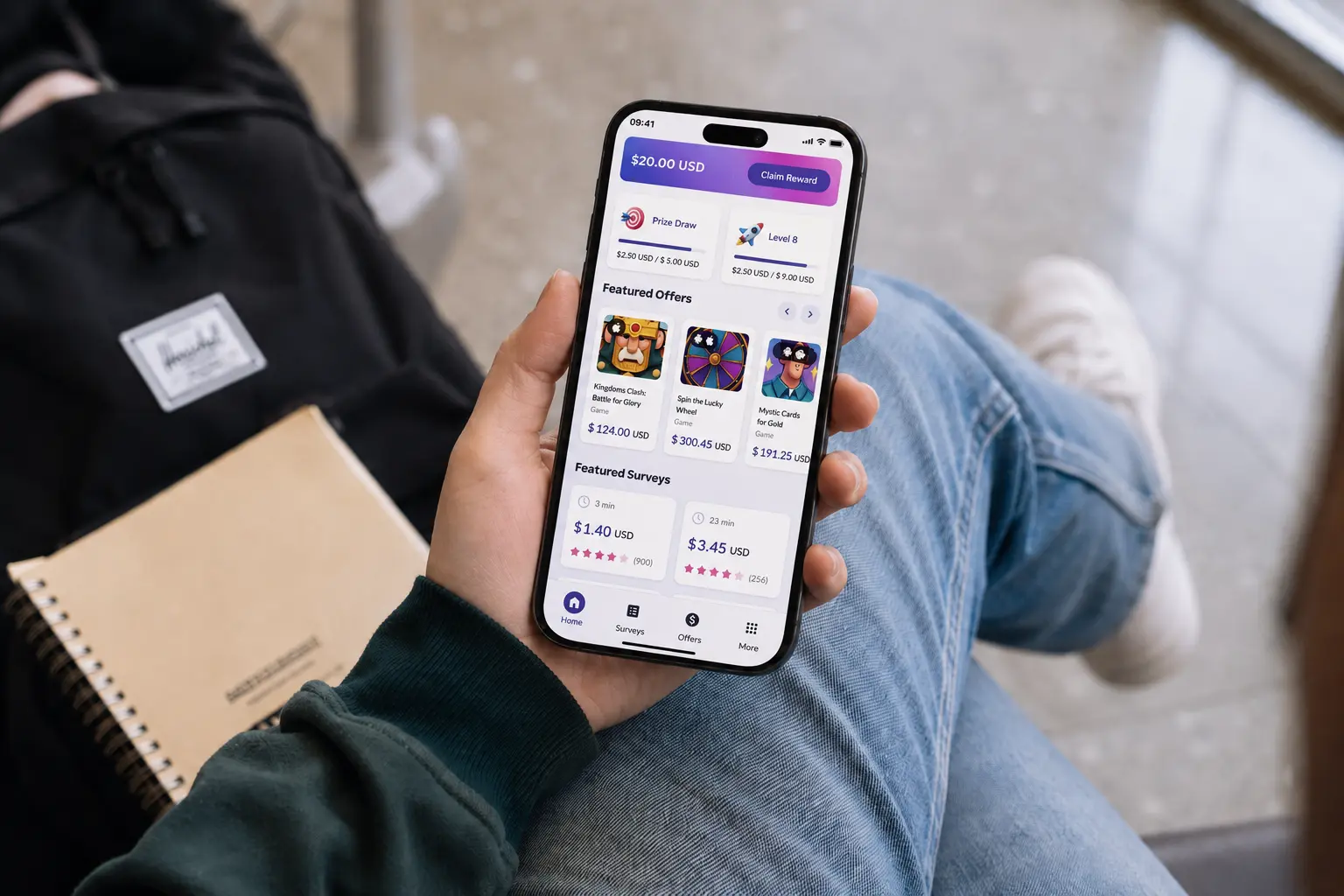
1. Reward app (EarnStar)
Reward apps are the fastest thing on this list to a first payout, because there's no application, no client, and no ramp. You play mobile games or complete offers and earn real cash or gift cards. Across 2.8 million users, the typical EarnStar earner reaches their first $5 the same day they start, and users who reach the $20 first cashout get there in about a week (EarnStar internal data, September 2025 to August 2026).
- What it pays: about $5 to $50 a month for casual use, more with steady offer completion.
- Time to first payout: usually a day or two after a completed offer.
- Startup cost: $0.
- Platforms: EarnStar, which we own, pays through PayPal and major gift cards. Your first cashout is $20, then $5 after.
- Start this week: download the app, link your payout method, and finish one offer. Treat it as the idle-time anchor of your stack, not your main income.
2. Paid surveys and user research studies
Surveys pay little per task, but user research studies pay far more, and they're the underrated half of this category. Studies are longer, harder to qualify for, and pay accordingly.
- What it pays: surveys run $0.50 to $3 each; user research studies commonly pay $50 to $100 an hour, with one-on-one interviews often $100+.
- Time to first payout: days for surveys, up to two weeks for a study once you're selected.
- Startup cost: $0.
- Platforms: UserInterviews and uTest for studies, Prolific for higher-quality surveys.
- Start this week: fill out your UserInterviews profile completely, since matching runs on it, and apply to a few studies a day.
3. Online tutoring
Strong subject knowledge converts fastest here, and one good subject is enough. Calculus, organic chemistry, intro Spanish and SAT prep all pay well.
- What it pays: $15 to $80 an hour, roughly $200 to $600 a month at 5 to 8 hours a week.
- Time to first payout: one to two weeks to your first session.
- Startup cost: $0.
- Platforms: Wyzant skews higher on rate; Tutor.com matches you with students faster.
- Start this week: list one subject with your major or course grade as proof, and take the first lower-rate session to earn a review.
4. Freelance writing, editing or design
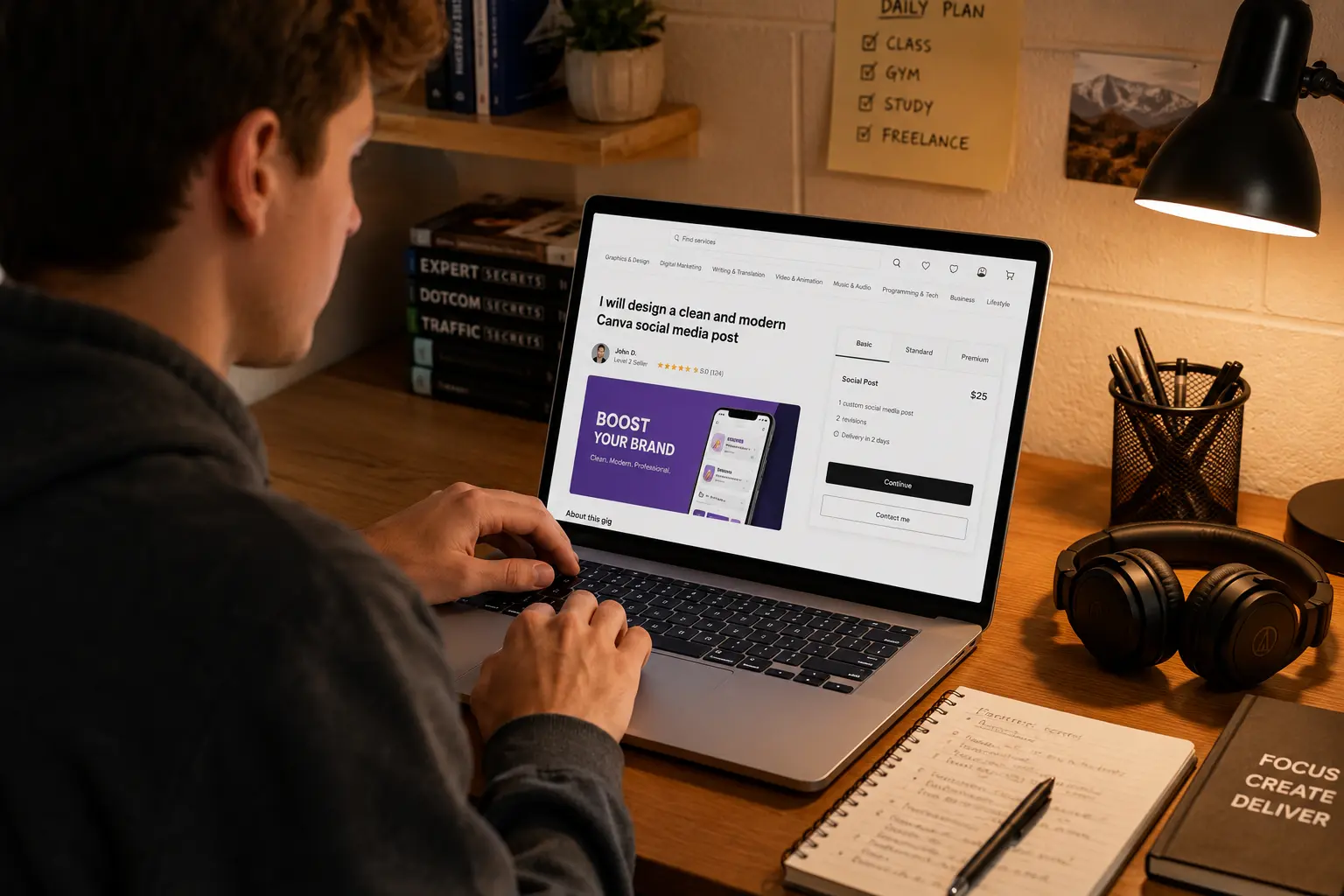
Fiverr and Upwork lean on entry-level gigs that fit student life, like blog editing, Canva graphics, and basic data entry. The catch is the ramp, so expect a quiet first week before momentum builds.
- What it pays: $50 to $300 in month one, climbing to $400 to $800+ once you've stacked five-star reviews, roughly $18 to $45 an hour past the ramp.
- Time to first payout: one to three weeks to a first paid gig.
- Startup cost: $0.
- Platforms: Fiverr and Upwork.
- Start this week: pick one narrow service, like podcast show notes or Notion setup for founders, and own it rather than offering everything.
5. Virtual assistant work

Virtual assistants handle inbox triage, calendar booking, research and social scheduling for solo founders. The work is repeatable and trainable, which is why it pays steadily.
- What it pays: $15 to $25 an hour, about $300 to $1,000 a month at 5 to 10 hours a week.
- Time to first payout: one to three weeks to a first client.
- Startup cost: $0.
- Platforms: Belay, Time etc., or direct LinkedIn outreach to founders posting about being overwhelmed.
- Start this week: build a one-page Notion site with three mock workflows, like inbox triage and a content scheduler, and link it in your outreach.
6. Social media management for one local business
Target a business with foot traffic but a half-empty Instagram, like a campus coffee shop, salon, or gym. Offer one tight package, not a menu.
- What it pays: $250 to $400 a month per client for around 12 scheduled, captioned posts.
- Time to first payout: one to two weeks once a client signs.
- Startup cost: $0.
- Platforms: direct outreach, no marketplace needed.
- Start this week: build one sample feed in Canva, then pitch three local businesses so they can see what they're paying for.
7. AI data and prompt tasks
Training data for AI models is a real, growing gig, and entry-level tasks need no special background. Work ranges from labelling data to rating and testing chatbot responses.
- What it pays: roughly $15 to $40 an hour, with entry-level data labelling at the lower end and prompt or chatbot-testing work higher.
- Time to first payout: one to two weeks, usually after a qualification task.
- Startup cost: $0.
- Platforms: DataAnnotation, Outlier, and Appen, plus entry-level AI listings on Upwork.
- Start this week: create a profile, pass the qualification task carefully since it sets your access, and start with short tasks.
8. Search engine evaluation and transcription
Two steady online gigs that reward accuracy over speed. Search evaluators rate results for quality; transcribers turn audio into text.
- What it pays: search evaluation around $14 to $16 an hour; transcription about $15 to $25 an hour as you get faster.
- Time to first payout: one to two weeks, usually after a qualifying test.
- Startup cost: $0.
- Platforms: Appen and Telus for evaluation; Rev and GoTranscript for transcription.
- Start this week: apply, prepare for the entry test since it gates the work, and start with shorter files to build accuracy.
9. Reselling online
Flipping secondhand finds works entirely from your phone, and it's one of the faster gigs to a first dollar once an item sells. Keep startup small by sourcing cheap and listing fast.
- What it pays: about $100 to $500 a month, depending on how much you list.
- Time to first payout: days to a couple of weeks, once an item sells and clears.
- Startup cost: around $20 for your first inventory.
- Platforms: Depop, eBay, and Poshmark.
- Start this week: list five items with clean photos and honest descriptions, and price the first few slightly low to get sales and reviews moving.
10. Notion and Canva templates
Three micro-products fit dorm life, and they cross into passive income once they're built. You do the work once and sell the same file repeatedly.
- What it pays: $0 in month one, climbing to $200 to $600 a month by month three with one solid product.
- Time to first payout: a few weeks to a first sale.
- Startup cost: $0.
- Platforms: Notion templates on Gumroad ($9 to $29), Canva templates on Etsy ($5 to $19 a pack).
- Start this week: build one template for a niche you know, like a study planner for pre-med students, and list it.
11. Stock photo and clip licensing
If you already shoot photo or video, licensing turns footage you'd take anyway into royalties that pay for years on a single asset. The marginal effort is just uploading and tagging.
- What it pays: $0 to $20 a month with a small starter portfolio, climbing to $50 to $200 with 200+ assets.
- Time to first payout: months, as a library builds.
- Startup cost: $0.
- Platforms: Adobe Stock, Shutterstock, and Pond5.
- Start this week: upload and tag a first batch of 20 clips or photos, focusing on subjects buyers actually search for.
12. Digital products on Gumroad or Etsy
One tight niche beats one broad product every time. A focused digital product is the slowest to start but the closest to truly passive once it sells.
- What it pays: $0 in month one, $20 to $200 a month by month three with one product, and $300 to $800 once you've launched a few.
- Time to first payout: a few weeks to a first sale.
- Startup cost: $0.
- Platforms: Gumroad and Etsy.
- Start this week: ship one small product, like a Canva kit for student-org Instagram pages, and price it $9 to $29.
Which online side hustles pay fastest
When you need cash soon, this is the order the math points to, by realistic time from sign-up to money in hand:
- Reward app (EarnStar): a day or two after a completed offer.
- Surveys: days, though studies wait on selection.
- Reselling: days to a couple of weeks, once an item sells.
- Tutoring: one to two weeks to a first session.
- Freelance, VA, social media, AI tasks, evaluation: one to three weeks, once a profile or client lands.
Templates, digital products and stock licensing pay the most passively but the slowest, so treat them as a build-in-the-background layer, not this week's rent.
Stack two to reach $300 to $500 a month
The income comes from stacking, not from one magic hustle. Here are three scenarios built for real schedules.
Scenario A, freshman, 6 hours a week. A reward app on idle time ($20 to $40) plus five focused hours of Fiverr on one service ($260 to $460). Combined: about $300 to $500 a month.
Scenario B, sophomore with a subject, 8 hours a week. A reward app ($20 to $40) plus six hours of Wyzant tutoring ($280 to $560). Combined: about $300 to $600 a month.
Scenario C, laptop-only, 10 hours a week. User research studies when selected ($120 to $250) plus AI data tasks ($150 to $300). Combined: about $300 to $550 a month.
One rule keeps this from spiraling: run one steady earner plus one active gig for 30 days, then add a third only once the first two are stable.
If you need cash this week and can work in person
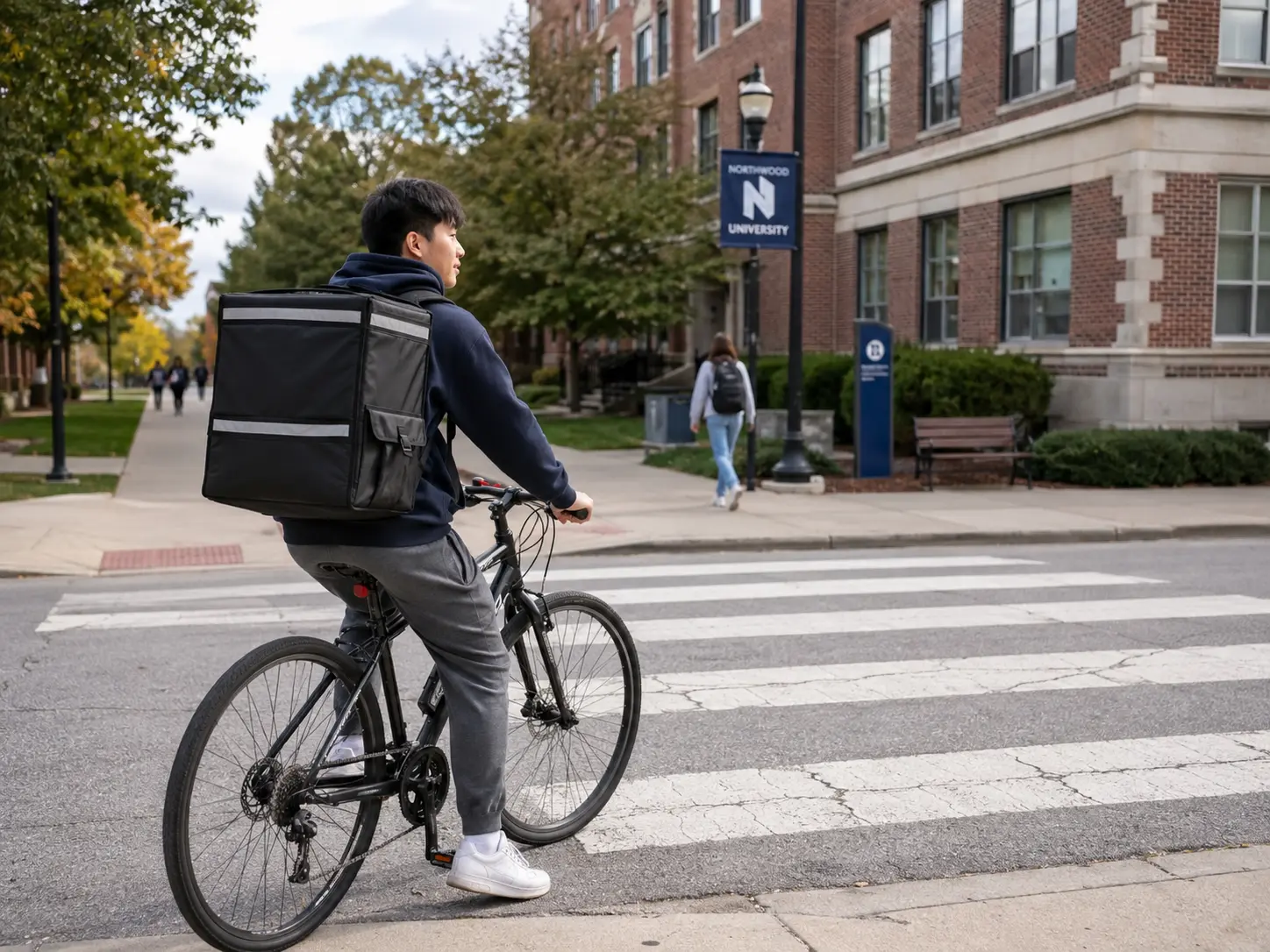
Online gigs ramp; in-person work pays faster. Food delivery by bike on Uber Eats or DoorDash can pay within days of onboarding, dog walking on Rover clears once your background check approves, and a campus job pays on the regular payroll cycle. None needs a car, and all are covered in depth by dedicated guides if you go that route.
Taxes, scams and payout proof
You owe tax on all your gig income, even if no platform ever sends you a form. Only the paperwork changed for 2026. Payment apps like PayPal now issue a 1099-K only over $20,000 and 200 transactions, and platforms like Fiverr and Upwork issue a 1099-NEC once they've paid you $2,000 or more, up from $600. Track your gross earnings from each platform from your first dollar.
On scams, the rule is simple. A legit online gig never asks you to pay to start, buy a starter kit, or hand over card details to unlock a payout. Stick to platforms with a traceable payout method and a public payment history, and skip any listing that promises hundreds a day for no skill or pushes you off-platform to get paid.
Start this week
The best online side hustle is the one you'll actually open tomorrow. Pick one steady earner plus one active gig, run them for 30 days, and add a third only once those two are stable. That stack, not one magic hustle, is what gets a student to $300 to $500 a month.
Get EarnStar free on the App Store or Google Play, or open earnstar.com on your laptop and send the app to your phone. Your first cashout is $20, then $5 after, via PayPal or gift cards.
FAQs about side hustles for college students
Get quick answers on student side hustles, realistic monthly earnings, payout speed, taxes, and which options actually work around a busy college schedule.


Get Paid to Play
Join 500,000+ players. Most reach their first $5 the day they sign up, cash out from $5.