Uber Eats pays per completed delivery, not by the hour. The median payout is about $8.16 a delivery, and the top 10% of drivers clear close to $12, based on Gridwise's 500,000-driver dataset.
Every figure here is gross, before gas, mileage, and tax, so your real take-home is lower. The full net-pay math comes later.
What one delivery actually pays
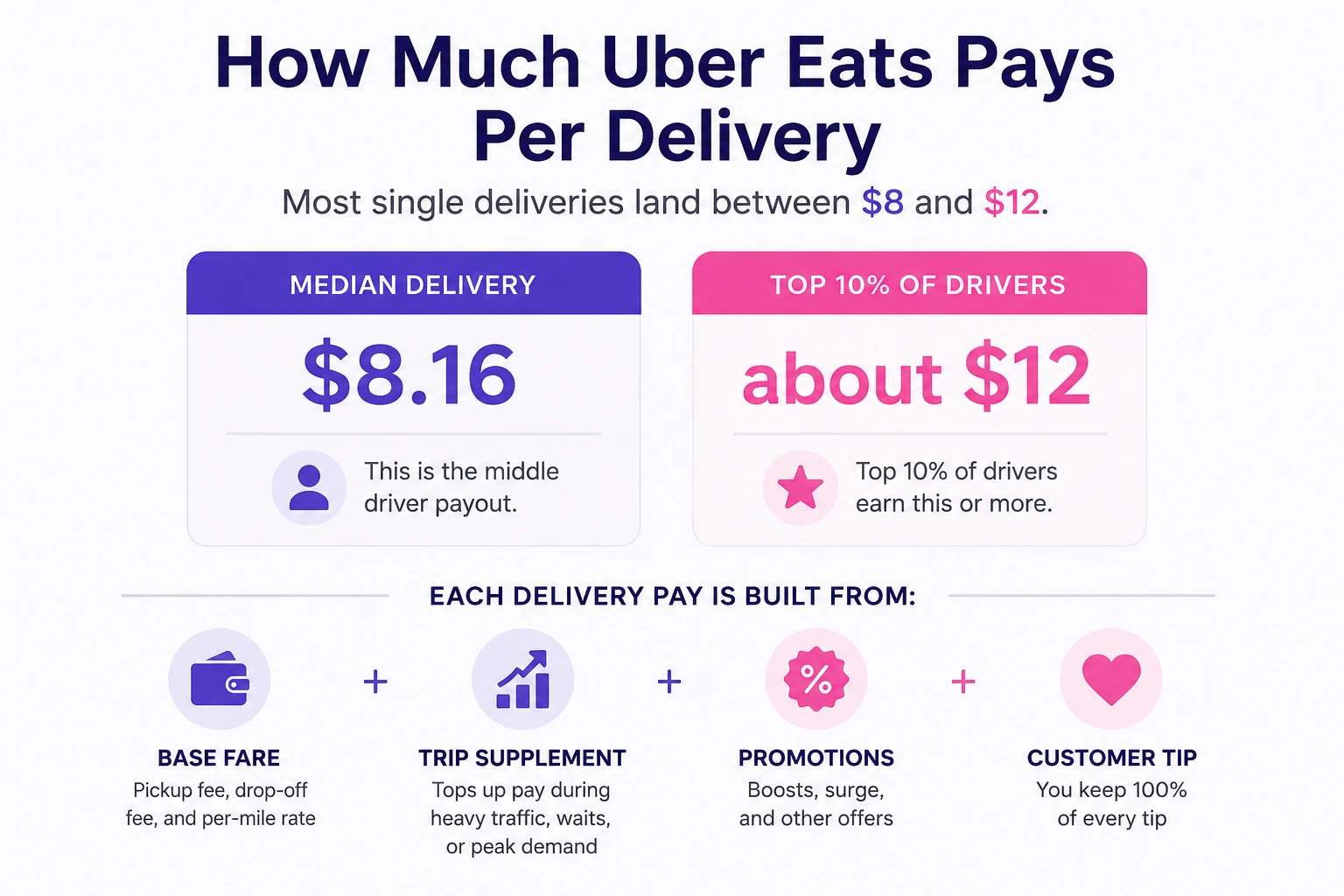
The median Uber Eats delivery pays $8.16 all in, counting base fare, promotions, and tip. The top 10% reach about $12, so most single orders land between $8 and $12.
The spread is wide because no two orders share the same distance, tip, or promotion. A short trip with no tip sits at the bottom, while a long trip during a surge with a strong tip can more than double it.
| Per-delivery tier | All-in payout |
|---|---|
| Median driver | $8.16 |
| Top 10% | about $12 |
Three things move a single payout the most: distance, tips, and active promotions. Stack a long-distance trip with a strong tip during a surge and one delivery runs well past the median.
Per delivery or per hour?
Your hourly pay is simply per-delivery pay multiplied by how many trips you finish. The median driver completes 1.70 deliveries an hour, while the top 10% manage 2.28 or more, so a faster driver earns more per hour at the same rate per trip.
This makes you an independent contractor, not an hourly employee, so there is no minimum-wage floor on a slow shift. The one partial backstop is the trip supplement, covered next.
It also means the clock alone earns you nothing. Only completed deliveries pay, so a quiet hour with no orders is an hour worked for free, which is why where and when you drive matters as much as how long.
How Uber Eats builds each payment
Each payment is built from four parts: a base fare, a trip supplement, any promotions, and the customer tip. That mix is why two deliveries on one shift can pay very differently.
The base fare bundles a pickup fee, a drop-off fee, and a per-mile rate, with a per-minute rate in some cities. Uber sets these by market, so the same trip pays differently city to city. On typical orders the base runs about $2 to $4, climbing toward $8 on longer or more complex runs.
Because the base scales with distance, a long suburban run can out-earn two quick downtown drops on base pay alone, even though the quick drops finish faster. Which pattern wins depends on your market.
The trip supplement tops up base pay when it would fall below your local market minimum, during heavy traffic, long restaurant waits, or peak demand. Promotions stack on top, and a weekly Boost zone can pay more than double the base inside the promoted area.
Earn by Order or Earn by Time?
Everything above describes the per-offer model, where Uber pays you for each delivery you accept. In some markets you can switch to Earn by Time, which pays a flat per-minute rate for your time on each trip instead of a fee per order.
The trade-off is straightforward. Per-offer rewards speed and good orders, so it pays best when demand is high and you can chain busy hours together. Earn by Time gives a steadier, more predictable rate, which can win on slow shifts when orders are thin and you would otherwise sit idle between pings.
It does tend to cap your upside. A strong per-offer hour during a dinner surge usually beats the clock, while a dead afternoon often pays more by time. Availability varies by city, and Uber has pulled the option from some markets, so check whether your app even offers the toggle before you build a shift around it.
How much of your pay is tips?
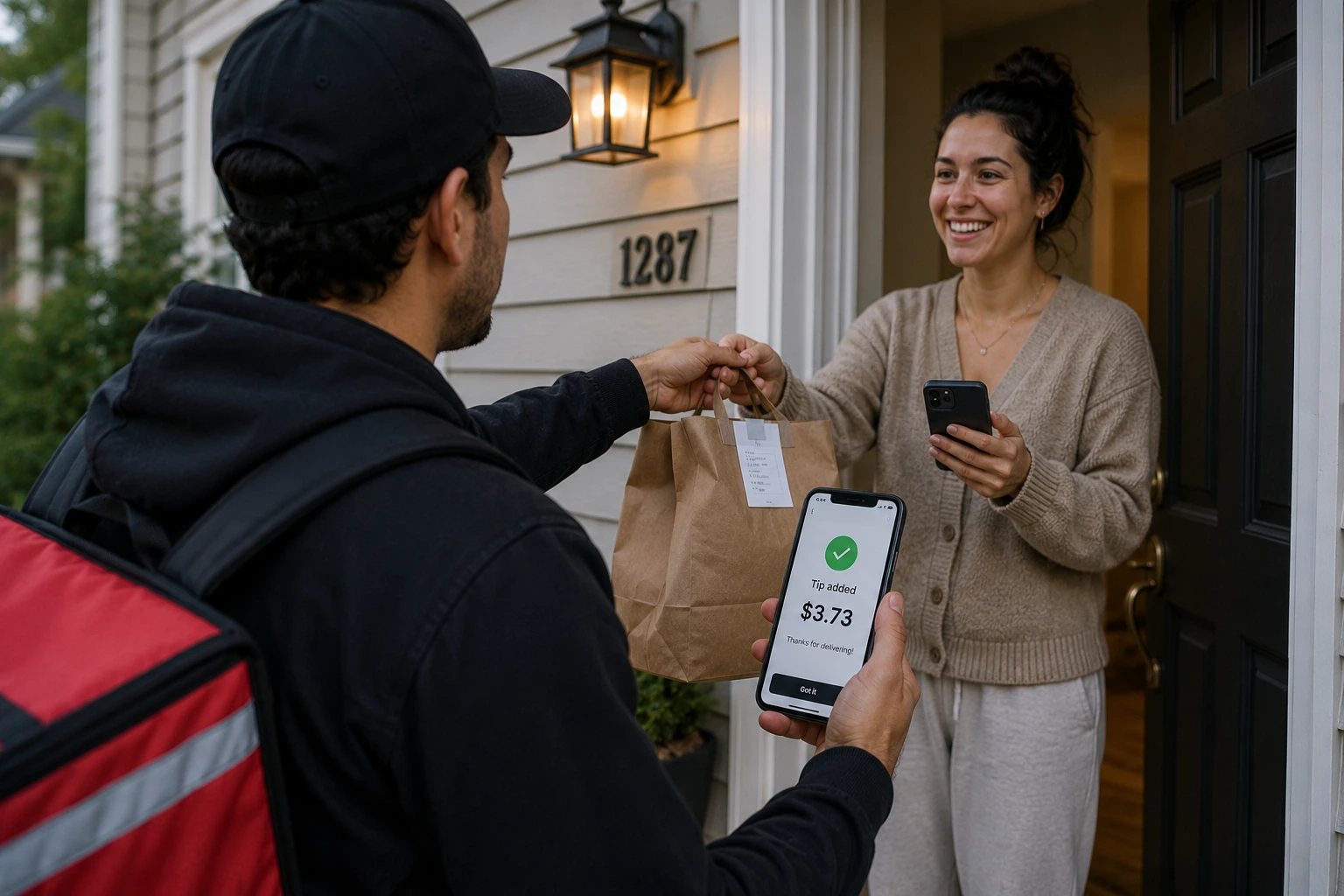
Tips carry a large share of the total. The median tip is $3.73 a delivery, about 46% of all-in per-delivery pay. On an hourly basis that is $6.26 for the median driver and $11.09 for the top 10%, so tip-heavy areas climb the tiers fastest.
You keep 100% of every tip, and customers have up to seven days after a delivery to add or change one. A late tip can lift a trip that first looked thin, though the same window lets a customer trim one.
Hourly, weekly, and the $1,000 question
Gross pay across base, tips, promotions, and bonuses runs a median of $15.03 an hour. The top 25% clear $17.02 and the top 10% reach $20.83.
| Driver tier | Gross hourly |
|---|---|
| Median | $15.03 |
| Top 25% | $17.02+ |
| Top 10% | $20.83 |
You will see higher numbers elsewhere. Self-reported figures from active markets often run $18 to $25 an hour, because they skip the slow shifts the all-driver median includes.
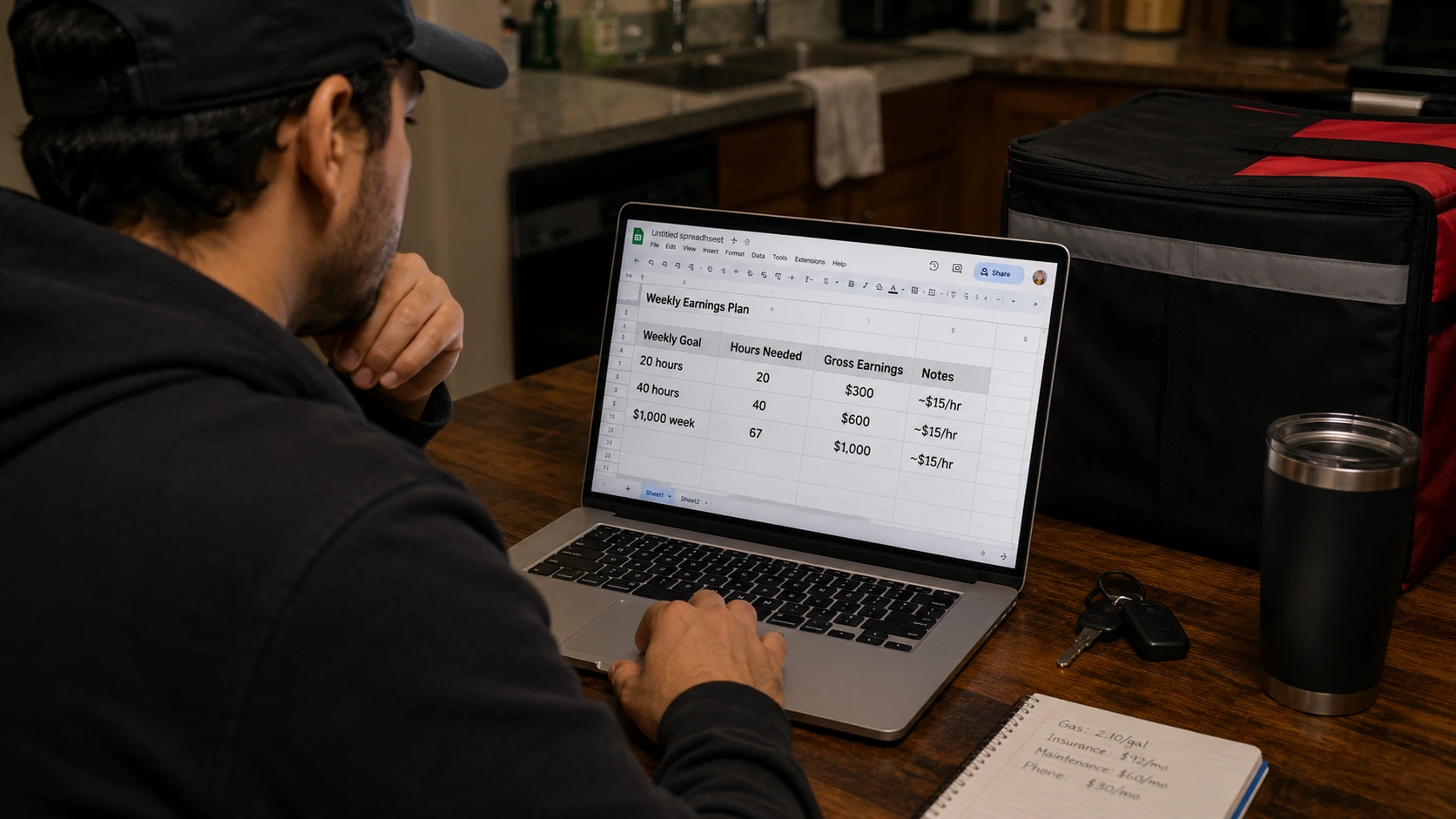
Over a 40-hour week, the median works out to about $600, with the top 10% near $830. Part-time scales down from there: a three-hour evening shift at the median is roughly $45, or about $225 across five evenings.
A four-figure week is reachable, but it takes hours. At the median rate you need about 67 hours to clear $1,000, dropping to 59 at the top-25% rate and 48 at the top-10% rate. That is a real grind at the median, so a $1,000 week suits drivers who already earn above it or want to spread income across more than one source, like these ways to make $100 a day online.
When you deliver changes what you earn
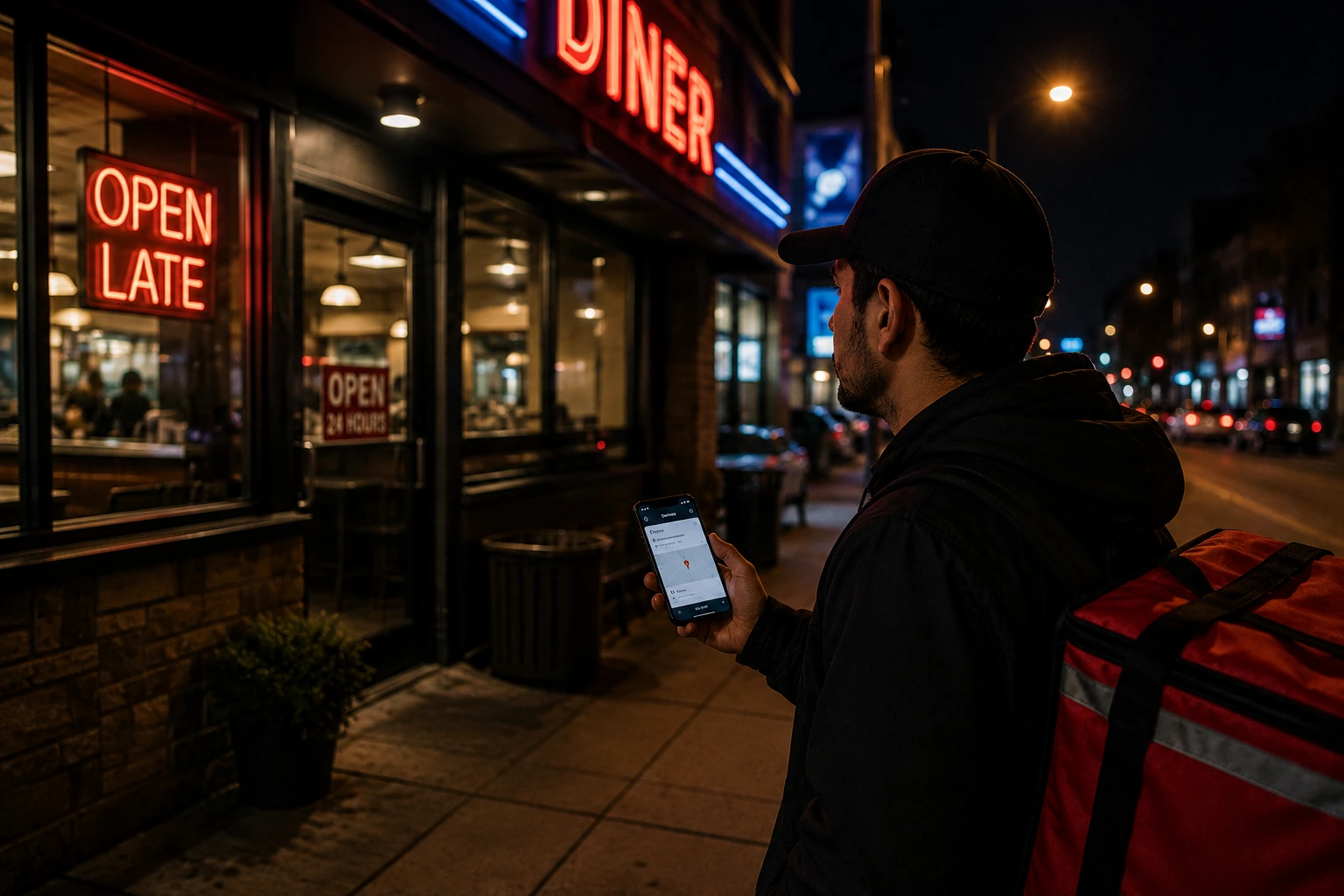
The same per-delivery rate pays very differently depending on the clock. Gridwise's time-of-day data shows more than a $4 an hour gap between the best and worst windows.
The dinner rush from 6pm to 8pm is the strongest stretch of the day, when order volume peaks and tips tend to follow. Weekend evenings pack the most orders into each hour.
Late night is the overlooked one. The 3am to 5am window averages $16 to $17 an hour, and midnight to 2am beats the middle of the day, partly because fewer drivers are out and late orders tip well.
The dead zone is Tuesday through Thursday from 9am to 2pm, the slowest block on the board. Working those hours is the quickest way to drag your average down.
Over a 20-hour week, choosing the right shifts over the wrong ones is the difference between about $365 and $285. That is roughly $80 a week, or more than $4,000 a year, for the same time on the road, and none of it requires driving any faster.
How to lift your hourly rate
When you drive sets the ceiling. How you drive decides where in the range you land. Four levers move it most:
-
Set an order floor. The strongest earners decline anything below about $2 a mile before they accept. Turning down weak offers can dent your acceptance rate, but it lifts what every hour actually pays.
-
Position for predictable surges. Bad weather is the most reliable, with demand spiking 20% to 40% as rain or snow pushes other drivers off the road, so even a small multiplier across several orders adds up. Game days are another, as demand climbs in the two to three hours before kickoff near stadiums.
-
Cut your dead miles. Parking near a cluster of restaurants shortens each pickup, which raises how many deliveries you fit into an hour without speeding. Since hourly pay is just per-delivery pay times trips completed, faster turnover at the same rate per trip is a direct raise.
-
Stack your promotions. Quests and Boost can run at the same time, so opting into a Quest during a Boost window lets a single delivery earn the bonus, the boosted rate, and the tip together. A handful of trips inside that overlap can outpay an ordinary hour.
The thread through all of these is the same. You are not chasing a higher rate per order so much as wasting less time between the orders you already get.
What you keep after expenses
Every figure so far is gross. Mileage is the biggest deduction, and the IRS 2026 business rate is 72.5 cents per mile, up from 70 cents in 2025. That one rate is meant to cover fuel, maintenance, insurance, and the depreciation quietly draining your car's value.
Tax is the second hit. As an independent contractor you owe self-employment tax of 15.3%, the Social Security and Medicare share an employer would normally split with you, on top of any income tax.
Here is how a single $45 shift can shrink once both come out:
| Per-shift math | Amount |
|---|---|
| Gross pay | $45.00 |
| Less mileage (30 miles at 72.5 cents) | $21.75 |
| Less self-employment tax (15.3%) | $3.56 |
| Rough take-home | about $19.70 |
The 15.3% applies to what is left after the mileage deduction, not the full $45, and the deadhead miles you drive to each pickup only widen the gap. Because nothing is withheld from your payouts, set aside part of each one for quarterly estimated taxes so the year-end bill does not catch you out, and track every mile to turn that rate into a real deduction rather than a missed one.
Scale that across a full week and a busy stretch can take home far less than the headline rate suggests. If the wear on your car and the thin net give you pause, EarnStar pays cash for playing mobile games, with no gas, no mileage, and a $5 cash-out floor.
How and when you get paid
Uber Eats deposits your earnings automatically each week. If you want them sooner, Instant Pay lets you cash out up to six times a day with no minimum, for $1.25 per cash-out on a personal debit card, or free with the Uber Pro Card.
A few extra cash-out details are worth knowing: cash-outs are free in New York City, and the weekly limit is around $6,000, with roughly $3,000 per cash-out. Drivers who care most about fast access tend to compare options, so a roundup of same-day gig apps is a useful next read.
Uber Eats vs DoorDash: which pays more?
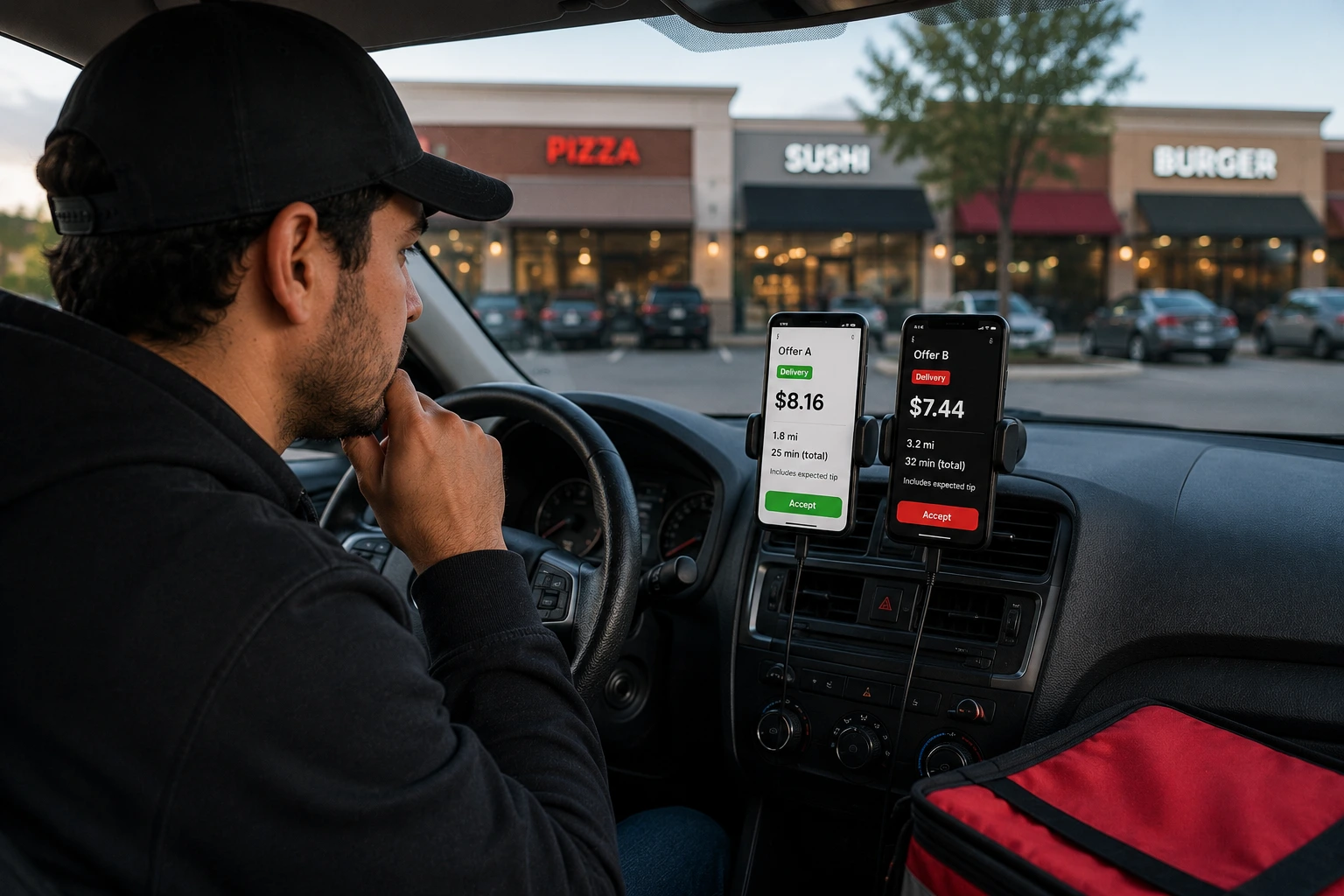
On Gridwise's 2025 figures, Uber Eats edges DoorDash on rate: about $15.03 an hour gross against $11.63, and $8.16 a delivery against $7.44. Uber Eats drivers also turn trips over faster, at 1.70 deliveries an hour versus 1.51.
| Metric | Uber Eats | DoorDash |
|---|---|---|
| Gross hourly | $15.03 | $11.63 |
| Per delivery | $8.16 | $7.44 |
| Deliveries per hour | 1.70 | 1.51 |
DoorDash's edge is volume, not rate. It holds the larger share of the US market, so orders come steadier with less idle time in most suburban areas, and it shows the full tip before you accept, where Uber Eats keeps part of the tip hidden for about an hour. That is why many drivers run both at once and report 20% to 40% more per hour than sticking to one app.
The bottom line
The picture is simple. A single delivery centers on about $8, real hourly pay runs roughly $15 at the median and into the low $20s for the fastest drivers in strong markets, and your net depends on how many miles you burn to earn it.
Once gas, mileage, and self-employment tax come out, a busy week can leave you with far less than the gross suggests. The drivers who reach the top of the range are rarely the ones logging the most hours. They pick the busiest windows, filter out weak orders, and keep their miles down, so more of each shift turns into pay they actually keep.
If a no-vehicle option appeals, EarnStar pays out fast with a $5 floor through PayPal or gift cards. You can also browse more earning guides on the EarnStar blog.

Uber Eats pay FAQ


Get Paid to Play!
EarnStar pays you real cash for playing games on your phone. Cash out to PayPal or 200+ other methods anytime.