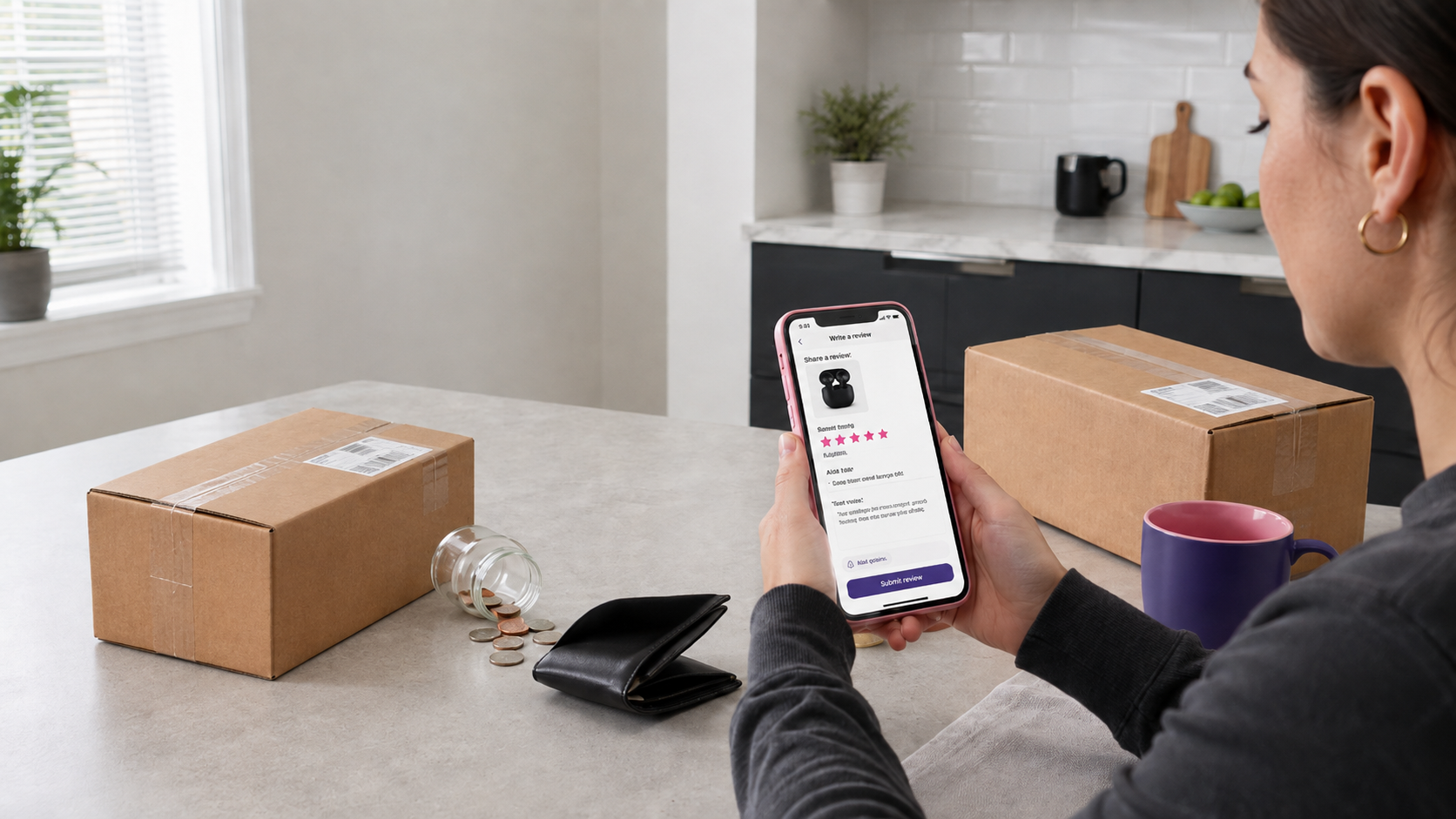
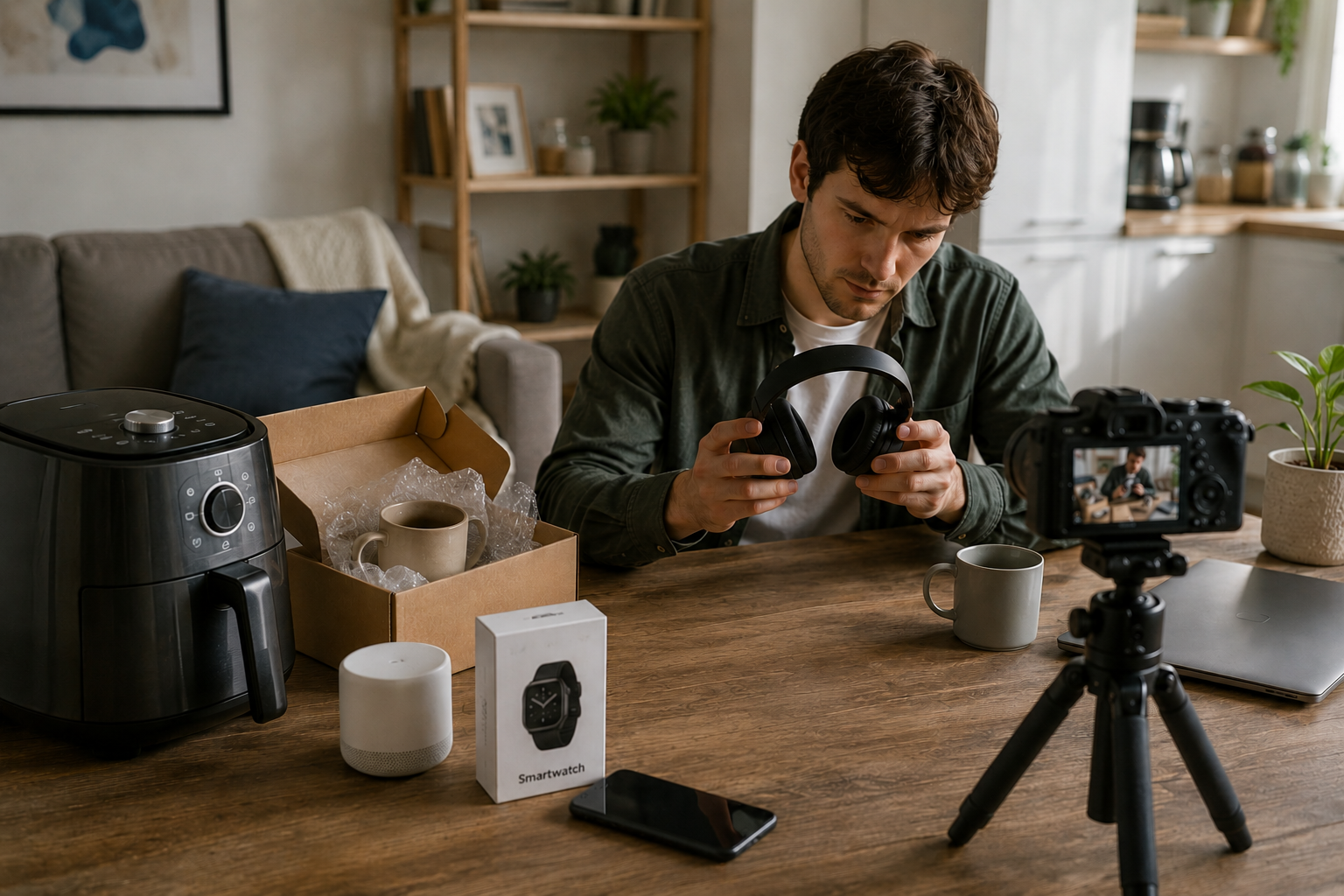
You can get paid to review products through three legitimate routes. Some platforms pay real cash for structured research and product testing, others send free full-size products in return for an honest review, and one pays affiliate commission on the shoppable videos you post.
The big paydays those ads promise are rare, and the "get paid to rate products" pitches flooding texts and WhatsApp are one of the fastest-growing task scams. Below are eight legitimate platforms, what each actually pays, how to start, and how to spot the fakes.
Can you really make money reviewing products?
How much you make depends entirely on which route you pick.
Structured research studies sit at the top end, paying $50 to $400+ per study. Product testing sites pay less per task, from a few dollars for a short test to more for live interviews.
Product panels skip cash entirely and send free items instead, while the commission route pays a cut of the sales your review videos drive.
| Route | What lands in your account |
|---|---|
| Cash platforms | Money via PayPal or a virtual Visa card, from a few dollars per test up to $400+ for a full research study |
| Free-product platforms | Full-size products you keep at retail value, with no cash changing hands |
| Commission platforms | A percentage of each sale your review videos generate |
Screening trims the real hourly rate because you can spend time on a qualifier and still get filtered out before the paid part begins. No honest platform guarantees income, and the ones promising steady four-figure months deserve the most doubt.
If you want a wider view of realistic side income, our guide to gig apps that pay the same day covers other options worth stacking.
The eight platforms side by side
Every platform here pays one of three ways. Five send cash, two send full-size products, and one pays affiliate commission on the videos you make.
The table sorts them by what actually reaches you. Match a route to what you want before reading the full entries.
| Platform | What you get | Typical payout | Payout method | How you're picked |
|---|---|---|---|---|
| UserTesting | Cash | Varies by test, shown before you accept | PayPal | Open sign-up, then screeners |
| Respondent | Cash | $50 to $400+ per study ($95 average) | Virtual Visa card | Apply per study |
| Prolific | Cash | Minimum $8 per hour | PayPal | Open sign-up, then invites |
| Testbirds | Cash | Per-bug pay scaled by severity, plus test fees | PayPal or bank transfer | Open sign-up, then invites |
| Amazon Vine | Free product | Retail value of items you keep | No cash payout | Invitation only |
| Influenster | Free product | Retail value of VoxBoxes | No cash payout | Open sign-up, then matched |
| Amazon Influencer Program | Commission | Commission on shoppable videos | Amazon payments | Apply and qualify |
| EarnStar | Cash | Varies by game | PayPal or gift cards, from $5 | Open sign-up |
Platforms that pay real cash
These four platforms pay cash, not product, for structured research and usability testing. The fifth cash option, EarnStar, pays for playing games rather than testing, and gets its own section further down. On all four here, you'll see the base pay for each task before you accept it.
UserTesting
| What you get | Typical payout | Payout method | How you're picked |
|---|---|---|---|
| Cash | Varies by test, shown before you accept | PayPal | Open sign-up, then per-test screeners |
UserTesting pays you to speak your thoughts aloud while you use apps and websites, recording your screen and voice as you go. Pay varies by test based on type, length, and demand, shown on your dashboard before you accept.
Completed tests are paid 14 days later through PayPal. The work suits anyone comfortable narrating clearly, and a decent microphone plus a quiet room raise your odds of passing screeners.
Most tests run from a few minutes to around 20, while live interviews take longer and pay more. How many tests reach you rises and falls with demand in your profile's categories.
Respondent
| What you get | Typical payout | Payout method | How you're picked |
|---|---|---|---|
| Cash | $50 to $400+ per study ($95 average) | Virtual Visa card | Apply per study |
Respondent connects you with companies running paid research, from one-hour interviews to focus groups and surveys. Focus groups and in-person sessions pay the most, averaging $150 to $250, while shorter surveys and interviews land between $50 and $150.
Payment arrives as a virtual Visa card once your session is verified. The trade-off is competition, since well-paid studies fill fast and you apply for each one rather than getting a steady queue.
A complete, honest profile is what gets you matched, because researchers screen for specific jobs, habits, or demographics. Check for new studies daily, especially in your first few weeks, since the best-paid slots go to whoever logs in first.
Prolific
| What you get | Typical payout | Payout method | How you're picked |
|---|---|---|---|
| Cash | Minimum $8 per hour ($12 encouraged) | PayPal | Open sign-up, then study invites |
Prolific runs academic and market research studies, mostly short surveys and simple online tasks. Every study must meet a minimum reward of $8 per hour, with researchers encouraged to pay around $12, a floor that lifts the effective rate above most survey sites.
You're paid in cash via PayPal rather than points, and studies appear when you match a researcher's criteria, so keeping your profile current means more invitations land in your queue.
Popular studies get claimed within minutes of going live, so acting fast on the notification matters.
Testbirds
| What you get | Typical payout | Payout method | How you're picked |
|---|---|---|---|
| Cash | Per-bug pay scaled by severity, plus fixed test fees | PayPal or bank transfer | Open sign-up, then project invites |
Testbirds pays you to test apps, websites, and connected products on your own devices, reporting bugs and giving usability feedback. You're paid for every bug you find, scaled by how severe it is, on top of fixed fees for usability tests.
You can request a payout through PayPal or bank transfer once your balance clears the platform's minimum. The more device types you own and register, the more projects you qualify for, since clients need coverage across specific phones and operating systems.
Detailed bug reports build your reputation on the platform, which brings steadier invitations over time.
Platforms that send free products
These two send full-size products instead of cash. The reward is whatever you'd have paid at retail for what you keep, and you still owe genuine feedback in return.
Amazon Vine
| What you get | Cost to you | How you're picked |
|---|---|---|
| Free product | Tax on the retail value | Invitation only |
Amazon Vine sends free products to a small group of trusted reviewers called Vine Voices, who try each item free and post honest, unbiased reviews. You can't apply; Amazon invites reviewers based on how insightful their past reviews have been.
The value is real, since Vine members receive everything from kitchen gear to electronics at no cost. At tax time, the retail value of products you accept counts as reportable income.
Vine also sits at the center of the wider Amazon-review confusion the next section clears up. You're rewarded with product here, never paid per star rating.
Influenster
| What you get | Cost to you | How you're picked |
|---|---|---|
| Free product | None to join | Open sign-up, then matched |
Influenster sends free full-size products in themed boxes called VoxBoxes, matched to members based on their interests. Anyone can join, complete a profile, and become eligible, with more boxes arriving the more active you are.
There's no cash involved, and one rule is non-negotiable. Influenster and the FTC both require you to disclose that a product arrived free or that your review is incentivized.
Skipping that disclosure breaks platform rules and the law. Adding it protects your credibility as much as it satisfies the rules, because readers trust reviewers who are upfront about freebies.
How to get paid to review Amazon products
You can't get paid to write Amazon star reviews. Amazon bans paid and incentivized written reviews on its store, and the FTC's fake-reviews rule bans paying anyone for a review that must express a set sentiment.
That leaves two legitimate Amazon routes. Amazon Vine gives you free product in exchange for honest reviews, though it stays invitation-only, as covered above.
The Amazon Influencer Program is the one Amazon route that pays for your opinion, and it works through commission rather than a per-review fee.
Amazon Influencer Program
| What you get | Cost to you | How you're picked |
|---|---|---|
| Commission | Your own video and time | Apply and qualify |
The Amazon Influencer Program lets you earn affiliate commission on shoppable video reviews you post to your Amazon storefront, not a flat fee per review. When a shopper buys after watching your video, you earn a commission on that sale.
There's no single flat rate, because commission varies by product category and how much your videos sell. To qualify, you apply and connect a social account with real engagement, then build a storefront of short, genuine product videos.
Earnings depend on traffic and conversions, so this route rewards people who already make video content. Unlike Vine, anyone can apply, though approval favors accounts with an active, engaged following.
Prefer cash over free products?
If you'd rather stack up withdrawable cash than fill a shelf with free samples, a few earning routes work on your own schedule.
EarnStar pays real cash for playing mobile games you'd play anyway, and it's free to use with no fees to join. You can cash out from $5 through PayPal or gift cards, with a low bar to your first withdrawal.
For readers who want cash in their account instead of product, and who'd rather not wait on study invites or screeners, EarnStar is a different route to the same goal. Payouts start small and grow with the time you put in.
Start earning with EarnStar and see how the games and payouts work before you commit any real time.
How to spot and avoid product-review scams
Task scams disguised as paid product-rating work are one of the fastest-growing job scams in FTC data, and one rule filters out most of them. A real job never asks you to pay before it pays you.
Red flags to walk away from
The scams share a handful of tells. Spotting even one is enough to close the tab.
- Upfront fees are the clearest signal. If an app asks you to pay to unlock work or release your "earnings," it's a scam.
- A job offer that lands in your WhatsApp or text messages, especially one you never applied for, is almost always fake.
- Anything promising money to like, rate, or "optimize" products is describing illegal work, not a real job.
- Crypto "recharge" demands, where you deposit funds to reach higher-paying tasks, take your money and vanish.
For a longer look at telling real earning apps from fakes, read our honest Pocket7Games review.
Two rules that keep you safe
Two rules from the FTC cut through almost every product-review scam. First, never pay anyone to get paid, because being told to send money to unlock earnings you supposedly made is a guaranteed scam.
Second, no honest company will pay you to rate or like things online, because the FTC calls that illegal outright. A legitimate platform pays you for real work, real research, or real product feedback, never charging you for the privilege.
Apply both and you sidestep the traps that cost people $220 million in reported losses to job scams in the first half of 2024 alone, in the FTC's own figures.
How to get started and get picked
Platforms screen for fit before they pay, so how you set up matters as much as showing up. Screeners exist because companies need specific people, and a half-finished profile is the fastest way to miss the studies you'd actually qualify for.
- Pick one cash platform and one free-product platform to start, rather than signing up everywhere at once.
- Complete your profile honestly and in full, since screeners match you to studies based on what you tell them.
- Take each qualifier slowly and answer consistently, because rushed or contradictory answers get you filtered out.
- Deliver detailed feedback on every task, which is what keeps invitations coming and your rating high.
- Set up your payout method early, whether that's PayPal or a virtual Visa, so nothing delays your first cash-out.
Expect a slow first few weeks while you build a track record. Reviewers who stay consistent get the better-paid invitations, so treat the early low-paid tasks as your way in.
Where to start your first paid review
Where you start depends on whether you want cash or free product. For cash, start with one research or testing platform such as Respondent or Prolific, then check for new studies daily.
Those who'd rather get free products can build an invite-worthy Amazon review history or sign up for Influenster. Whichever side you pick, skip anything that asks for money upfront, since that single rule keeps you clear of the scams while you find the routes that fit your time.
For more guides on legitimate ways to earn, browse the EarnStar blog.
Frequently Asked Questions
A few questions come up again and again about getting paid to review products. Short answers sit here, with the detail in the sections above.


Start your first cash-out with EarnStar
EarnStar pays real cash for playing mobile games, free to join, no screeners between you and your first payout.