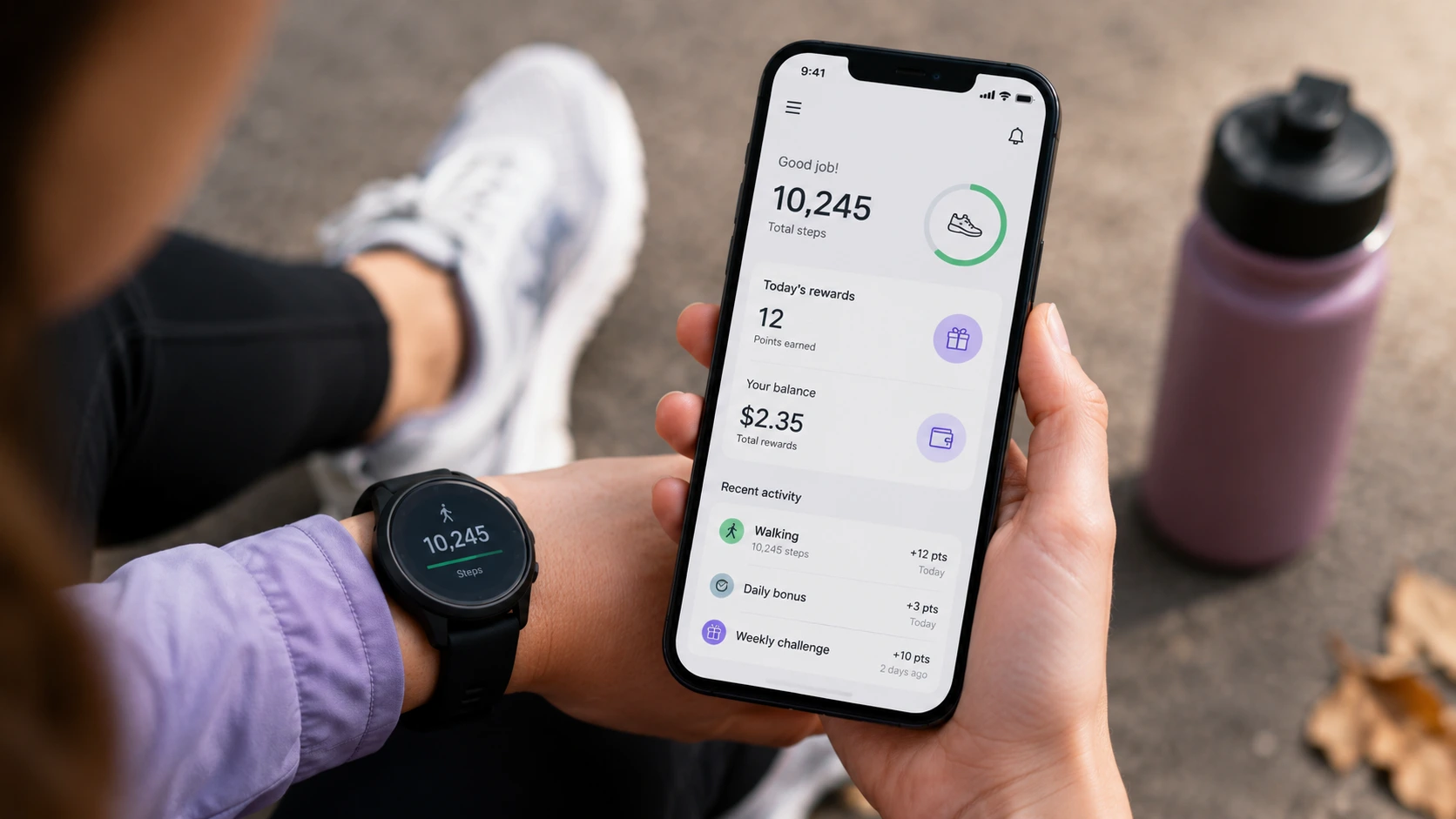
A few apps really do pay you to walk in 2026. Sweatcoin, CashWalk, Winwalk, WeWard, Evidation, and StepBet all reward steps, and Charity Miles turns them into donations if you'd rather give than earn.
The catch is the size of the reward. These apps pay pocket money, a few dollars a month, not anything close to a wage.
One thing to know before the numbers: these apps change their rates and payout thresholds often. Everything below was last checked in July 2026, so treat the figures as a recent snapshot, not a fixed rule.
In short
- Yes, apps really pay you to walk, but it's pocket money, a few dollars a month, not a wage.
- For real cash to PayPal, the picks are WeWard, Evidation, and StepBet. For gift cards, CashWalk, Sweatcoin, and Winwalk. Charity Miles gives to charity instead.
- Top WeWard users reach up to $1,000 a year, but only with challenges and offers on top of steps. Casual walkers earn far less.
- Any app promising $100 a day for walking is a red flag. The real ceiling is a few dollars a month.
Do apps really pay you to walk?
Yes, apps really do pay you to walk, but the reward is small and arrives as gift cards, marketplace credit, or a few dollars of real cash, not a steady income. The payout is real; it's just capped by design.
Some apps send actual money to PayPal. Others only let you swap points for gift cards or products in an in-app store. Know the difference before you pick one.
A CNBC Make It report on WeWard puts real numbers on it. Top users can earn up to $1,000 a year, and the company says it has paid out more than $20 million in cash. Casual walkers see far less.
How much can you really make?
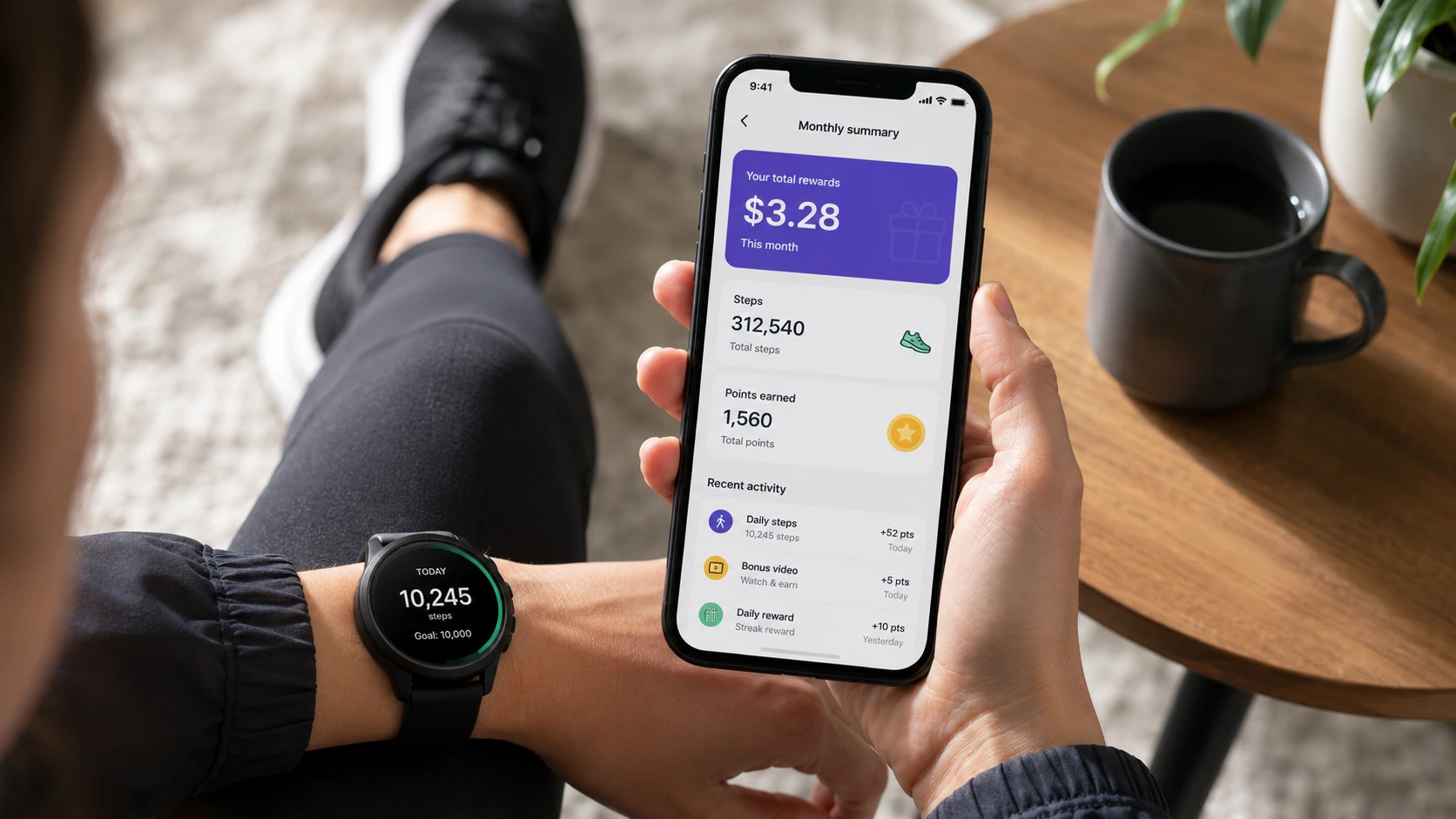
Most people earn a few dollars a month from walking apps, not the $100 a day that some ads promise. Any app promising "$100 daily just for walking" is lying to you.
A realistic monthly range
Independent, long-term reviews put the mainstream free apps at a few dollars a month from walking alone. A CashWalk tester's pace works out to roughly $30 to $60 a year depending on how consistently you walk, Evidation users report about $10 a year, and Sweatcoin's crypto route earns pennies. The per-app sections below carry the sourced numbers.
WeWard's founder has said average users can earn a few hundred dollars a year, but that figure includes challenges, partner offers, and in-app purchases, and it comes from the company itself. Treat it as a ceiling for committed users, not a typical result.
Why the payouts stay small
Rewards stay small because ads and brand partnerships fund them, and that budget only stretches so far.
If a few dollars a month isn't the return you're after, higher-effort work pays far more. For a clear contrast, what Amazon Flex drivers earn hourly shows the gap between a rewards app and real gig income.
The best walking apps for 2026 side by side
Seven apps make the shortlist for 2026, and each pays in a different way.
| App | How you earn | Realistic pace | Cash out | Payout type | Availability |
|---|---|---|---|---|---|
| Sweatcoin | ~1 SWC per 1,000 verified steps | ~6 SWC/day typical (cap is 10) | Marketplace and gift-card offers; crypto via Sweat Wallet | Marketplace and crypto, no direct PayPal | US + UK |
| CashWalk | 1 StepCoin per 100 steps, ~100/day cap | ~1 month per $5 voucher (10,000 steps/day) | Gift cards from 3,000 coins (Amazon, Walmart, Tesco) | Gift cards only | US + UK |
| Winwalk | 1 coin per 100 steps, 100/day cap | ~2 gift cards/year (walking only) | Amazon, Walmart, and more | Gift cards, plus PayPal in some countries | US + UK |
| WeWard | Step milestones, ~25 Wards/day walking cap | Months to a payout on steps alone | ~3,000 Wards = £15 (UK) | PayPal, bank, Venmo (US), vouchers, charity | US + UK |
| Evidation | Points for steps, sleep logs, surveys | ~$10/year | 10,000 points = $10 | PayPal cash | US only |
| StepBet | Stake ~$40, hit weekly step goals | Varies with pot size and winner count | Split the pot; PayPal on request | PayPal cash | US + UK |
| Charity Miles | Miles logged attract sponsor pledges | Donation, not personal cash | Goes to charity | Donation only | US focused |
Sweatcoin
Sweatcoin converts about 1,000 verified steps into 1 in-app sweatcoin (SWC). Free users are capped near 10,000 steps a day, and the same review puts the average verification rate at 65%, so a 10,000-step day typically earns about 6 SWC rather than the full 10. Over a month that's roughly 180 SWC for most walkers, with 300 as the theoretical ceiling.
What it pays and how you redeem
In-app sweatcoins redeem for marketplace products and gift-card-style offers, and they cannot be cashed out directly to PayPal or a bank. If you want money rather than merchandise, this is the wrong app for you.
There's a separate crypto path through the Sweat Wallet, but it isn't worth chasing. The SWEAT token trades at a fraction of a cent in 2026, well under $0.01 and down from an all-time high near $0.09, and the minting rate keeps falling, so a month of walking is worth pennies. Treat the tokens as a novelty, not cash.
Availability and scale
Sweatcoin runs in around 165 countries, including the US and UK, and the company itself is UK-based. The app is genuinely popular, with 150 million registered users as of 2024 and about 22.5 million downloads in 2025.
CashWalk
CashWalk gives you 1 StepCoin per 100 steps, collected by tapping the coin box each day, with earnings capped around 100 coins a day. Miss a day's tap and those coins don't bank, so a quick daily habit matters.
Payouts and redemption
A $5 gift card costs 3,000 StepCoins, and coins redeem for major brands like Amazon, Walmart, and Starbucks. UK walkers get Tesco and ASDA vouchers too.
At a steady 10,000 steps a day, that $5 works out to about a month of walking, or roughly $60 a year if you keep it up, which sits right in the pocket-money range. Redeem on a schedule rather than letting coins pile up.
US and UK availability
CashWalk works in markets including the US, Canada, and the UK. For UK walkers, a £5 voucher takes roughly a month of daily walking too, and thresholds vary by account and can change, so check the current rate in the app.
Several listings use similar names, so install the official CashWalk Labs app. The figures above apply to that one.
Winwalk
Winwalk pays 1 coin per 100 steps up to a cap of 100 coins a day. To bank each day's coins, you open the app and watch a short ad. Skip the daily check-in and the coins slip away.
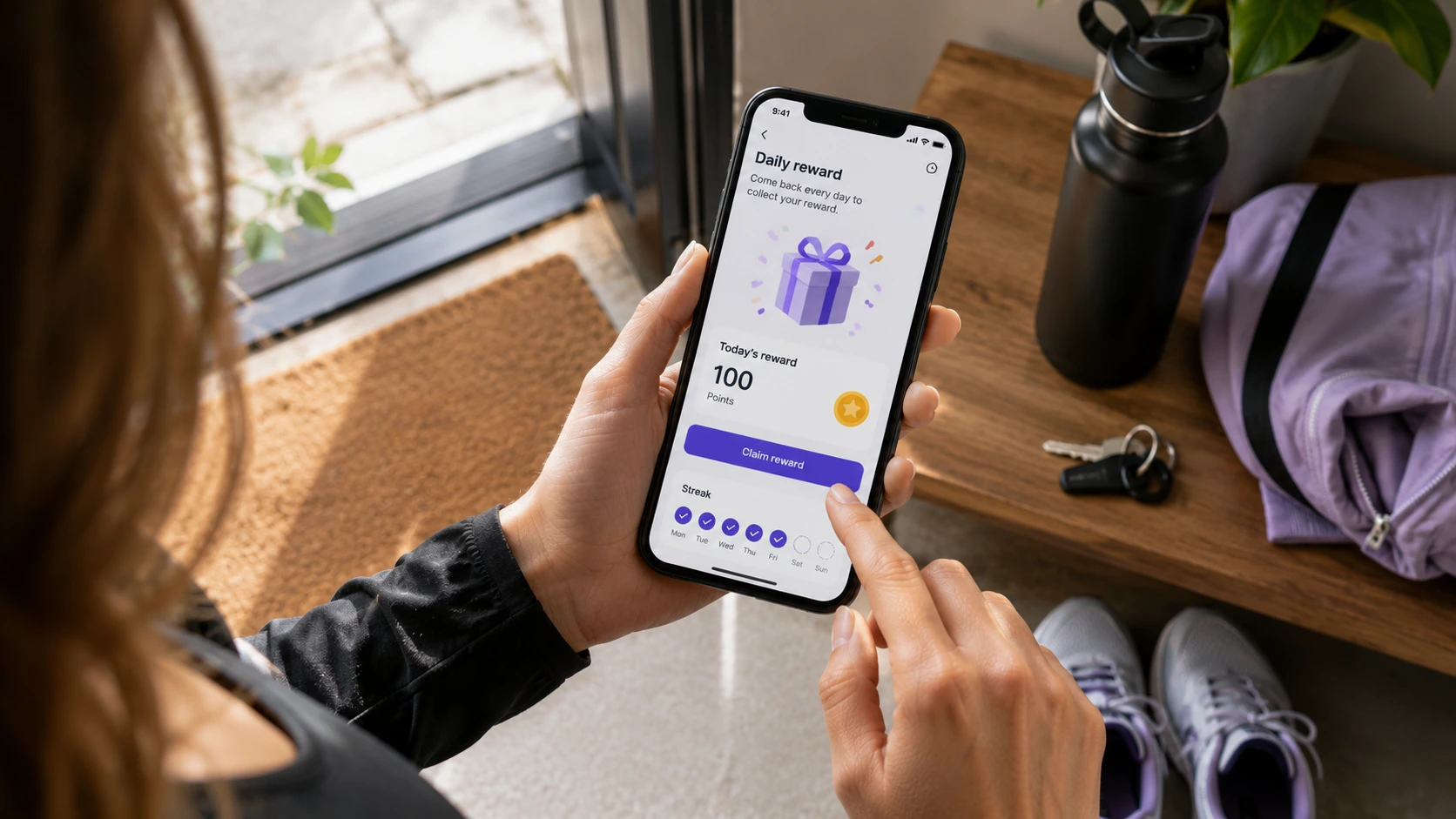
Coins redeem for gift cards from Amazon, Walmart, and other retailers, and its App Store listing now says PayPal rewards are available in supported countries too. Winwalk runs on both Android and iOS after a long Android-only stretch.
From walking alone the pace is slow, because a $10 gift card costs 16,000 coins at current rates. At 100 coins a day that's about two gift cards a year, though in-app missions and surveys can speed things up if you want to put in the extra taps.
WeWard
WeWard is the strongest pick for real cash. You earn Wards at step milestones through the day, on a ladder that starts at 1,500 steps and tops out at 25 Wards for 20,000 steps, so walking alone caps around 25 Wards a day. Missions, partner offers, and check-ins add more on top.
What it pays and how you cash out
In the UK, around 3,000 Wards converts to a £15 bank transfer or gift card. Payout options are the widest in this roundup: WeWard supports PayPal, bank transfer, Venmo, and vouchers, plus charity donations. Venmo is US only, and the Wards needed for each reward vary by country and over time, so treat any threshold as a snapshot.
Cash-outs usually process within two to five days, with up to 15 business days allowed for fraud checks. The app is available in the US, UK, Canada, and much of Europe.
Realistic earnings
On steps alone, reaching a payout takes months. The report cited earlier puts top users at up to $1,000 a year, and the company claims average users can reach a few hundred dollars annually with every challenge and bonus included. A casual walker collecting the daily milestones should expect a few dollars a month.
Evidation
Evidation pays real cash. 10,000 points redeem for $10 via PayPal, usually within a few business days. It's a straightforward, no-gimmick payout.
The earning rate rewards consistency over speed. You collect points for daily steps, for logging meals and sleep, and for answering short surveys. Long-term users report reaching about $10 over a year, which suits anyone wanting a small annual bonus rather than a fast return.
Formerly called Achievement, Evidation launched in 2012 and is one of the longest-running apps in this space. It rewards your health and activity data, and it's currently open to US residents only.
StepBet
StepBet flips the model: you stake money, usually about $40, and split the pot with everyone who hits their personalized weekly step goals. You're betting on yourself to move.
Payouts vary with the size of the pot and the number of winners, after StepBet keeps 15% of the gross pot. Winnings are credited as StepBet points when a game ends, and you can request a PayPal payout at any time. A No Lose Guarantee means you won't lose money if you hit your goal, even in games where almost everyone wins.
The risk is real. Miss your step goal and you forfeit your stake, so this app suits people who already have the discipline to walk consistently, not those hoping the app will build the habit for them.
Charity Miles
Charity Miles doesn't pay you, it turns your miles into money for charity. You walk, run, or bike, and the app raises pledges from friends, employers, and sponsors against the miles you log. Corporate partners fund the donations, and the money goes to the cause rather than your pocket.
It earns its place in this roundup because a reward doesn't have to mean personal income. If the feel-good return matters more than the cash, Charity Miles is the one app here where walking pays someone else, by design.
Which apps pay cash to PayPal and which give gift cards
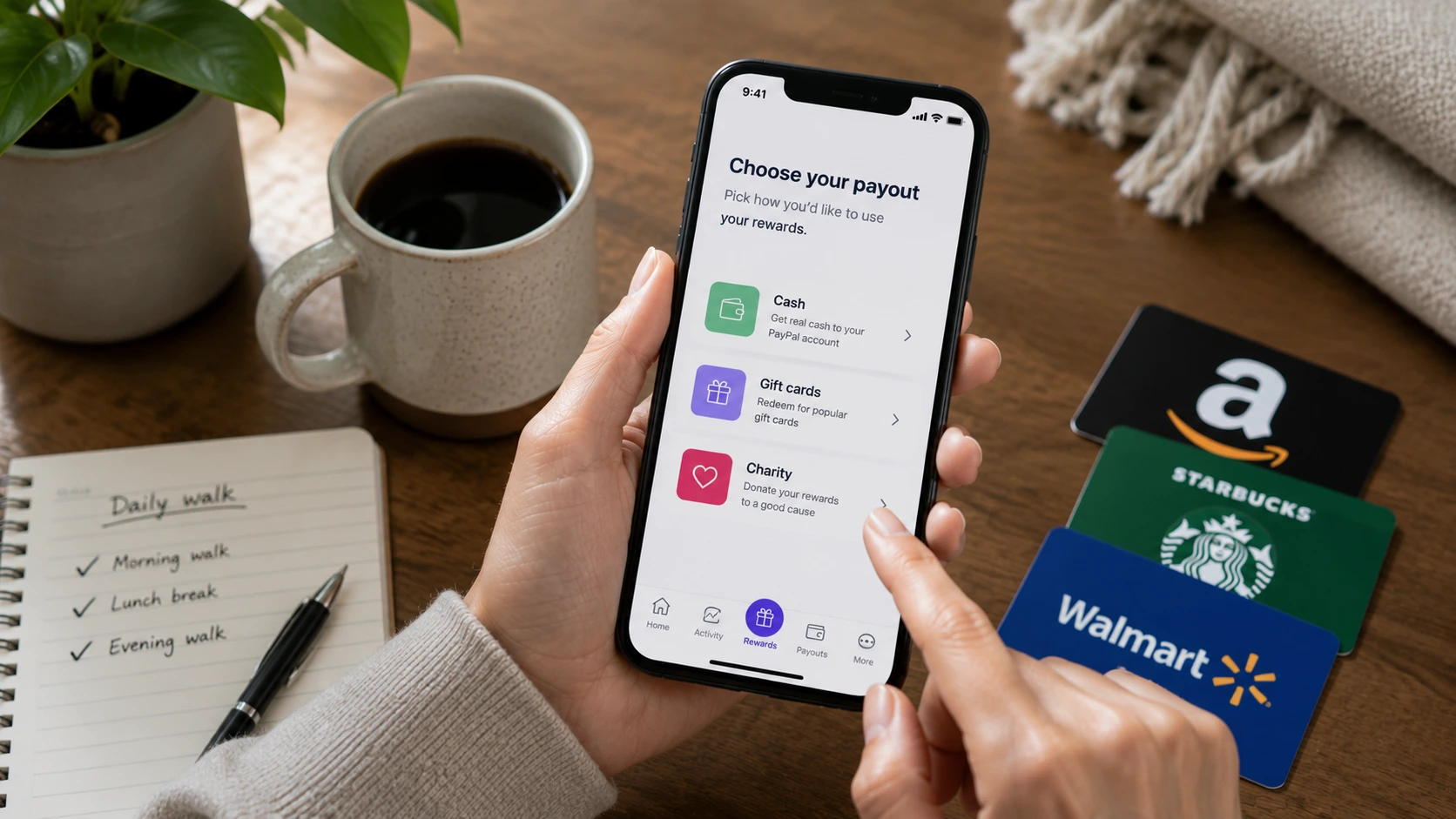
If you want real cash to PayPal, three apps deliver it: WeWard, Evidation, and StepBet. The rest pay in credit or merchandise, so match the app to the payout you actually want.
- Real cash to PayPal: WeWard, Evidation, StepBet.
- Gift cards or marketplace credit: Sweatcoin, CashWalk, Winwalk (Winwalk has also added PayPal in some countries).
- Donation only: Charity Miles.
Gift-card apps work fine, they just pay in credit instead of cash. If your goal is an Amazon balance or a Starbucks card, CashWalk or Winwalk gets you there without the extra steps a cash withdrawal can involve.
Are these apps legit and safe?
Yes, the apps in this roundup are legitimate and do pay out, though a few permissions are worth checking before you install. The real scam risk comes from apps that promise huge daily payouts, not the ones that pay a little.
What legit really means here
Every app above pays what it promises, and the amounts are simply small. The clearest scam signal is any walking app claiming $100 a day, because the realistic ceiling for the mainstream apps is a few dollars a month. For the same approach applied to a very different app, read our Pocket7Games review.
Privacy and permissions
Check what step and location data you're granting before you tap accept. In an August 2025 test of 23,300 iOS app packages, 35% failed to disclose data collected, which is reason enough to read the permissions screen.
Fitness apps in particular can gather detailed location and activity records that raise real privacy questions. Grant only what the app needs to count steps, and review the privacy settings once you're in.
How these apps make money
These apps pay you because your steps make them money in other ways, mostly through ads you watch, anonymized activity data, and brand marketplaces. Your walking keeps you opening the app, and that attention is what they sell.
The funding model runs on a few reliable revenue lines.
- Rewarded video and offerwall ads you watch to unlock or bank rewards.
- Sales of anonymized, aggregated activity data.
- Brand and affiliate marketplaces where your points get spent.
- Premium subscriptions that remove ads or boost earning rates.
- Entry-fee cuts, in the case of betting apps like StepBet.
That structure caps the rewards, because the ad and partnership budget only funds so much. The category is still growing fast, though, with the move-to-earn fitness apps market valued around $705 million in 2025 and projected near $2.5 billion by 2034.
The same ad-and-reward engine powers other everyday earning apps too. If the model interests you, getting paid to sleepruns on nearly identical economics.
Which walking app is best for you?
The best walking app depends on how you want to be paid. WeWard leads for real PayPal cash, CashWalk is quickest for gift cards, and Sweatcoin offers the widest marketplace.
The right pick comes down to what matters most to you.
- Want real cash: WeWard or Evidation (US only for Evidation).
- Want gift cards fast: CashWalk.
- Want a challenge with stakes: StepBet.
- Want to give to charity: Charity Miles.
None of these replaces income. If you want more than pocket change, higher-effort work pays far better. For a sense of the real alternatives, what Uber Eats pays per delivery shows what an hour of gig work returns, and there are plenty of gig apps that pay same day if speed matters more to you.
There's also the option of earning from something else you already do. At EarnStar we reward the time you spend playing mobile games with real cash, which is a different thing from walking apps but built on the same idea: turning a habit you already have into a payout.
How to start earning from walking today
Pick one app that matches how you want to be paid, install it, and grant step tracking so it can count the walking you already do. Starting with a single app beats spreading thin across five.
- Choose your app. Decide whether you want cash, gift cards, or a step challenge, then use the picks above to land on one.
- Install and connect step tracking. Link the app to Apple Health or Google Fit, and check the permissions screen so you only share what step counting needs.
- Set a target and redeem on schedule. Pick a daily step goal you already hit, then collect and cash out on a regular cadence so your coins don't lose value sitting in the app.
If you're looking for more casual ways to earn, we've also covered getting paid from EarnStar surveys, including how much you can make and how it works.
Frequently asked questions
Quick answers to the questions people ask most about walking apps and what they pay.


Get paid to play games!
EarnStar lets you earn real money while having fun. Download EarnStar free on iOS App Store and Google Play to start turning your game hours into payouts.